Federal Law: 2011 SC Justices
📅 2026 Update: Changes in Federal Law Since 2011
Since the original article was published, there have been important updates in federal law. Key amendments to federal rules and significant court rulings have emerged. These updates are essential for understanding how federal courts operate today.
The earlier article continues further down the page.
📜 Proposed Amendments to Civil Procedure
In June 2024, the Advisory Committee on Civil Rules proposed amendments to Rules 16(b) and 26(f). These amendments focus on the "privilege log" issue. They require parties to develop methods for complying with the requirement to describe withheld materials.
These changes will take effect on December 1, 2025.
📚 Proposed Amendments to Evidence Rules
Amendments to Appellate Rule 6 were also proposed by the Advisory Committee on Evidence Rules. These changes address resetting the time to appeal in bankruptcy cases where courts have original jurisdiction. Like the Civil Rules, these amendments are set to take effect on December 1, 2025.
🔒 Privacy and Security Rules Report
The Judicial Conference of the United States submitted its 2026 report on privacy and security rules. This report assesses the adequacy of rules under the E-Government Act of 2002. It covers the period from July 2024 to June 2026, discussing suggested amendments from the previous report.
⏳ Federal Court Case Processing Times
Processing times for federal court cases can vary widely. The complexity of the case and the court's docket affect how quickly a case moves. For the latest information, individuals should check the specific federal district court's website or contact the clerk’s office.
📌 Key Points Summary
- Proposed amendments to Civil and Evidence Rules will take effect December 1, 2025.
- A new privacy and security rules report was issued in 2026.
- Federal court processing times vary based on case complexity.
- Individuals must check with their local courts for the most current information.
💡 Tips for Navigating Federal Courts
Review the details of your situation with your attorney before taking any action related to federal law.
📝 Complete Required Forms
When filing a case in federal court, ensure that you complete the appropriate complaint form. Each federal district court has specific forms and procedures, so verify these before submission.
💸 Pay Filing Fees Promptly
To file your case, you must pay the required filing fee. Each district court sets its own fees, and submitting your payment on time is essential to avoid delays.
⏰ Be Aware of Deadlines
Understanding the statute of limitations is crucial. For example, personal injury claims have a two-year limit from the date of injury. Missing this deadline can result in losing your right to file a claim.
🔍 Research Legal Aid Options
If you need assistance, various nonprofit organizations offer free or low-cost legal help. Organizations like the ACLU can guide you in navigating federal court procedures.
📅 Check for Rule Updates
Stay informed about any proposed amendments to federal rules. Changes can impact how cases are processed and the requirements for filing. Regularly checking for updates can help you stay compliant.
📞 Contact Your Local Clerk’s Office
For the most accurate information on processing times and court procedures, reach out to your local clerk’s office. They can provide insights specific to your case and the current status of federal rules.
🏆 Top Services Ranked by User Reviews (2026)
This section covers popular services that assist individuals dealing with federal law matters. These services include online legal document creation, business formation, and access to legal resources. The following rankings are based on Trustpilot data checked in October 2026.
Ratings may change as more reviews are submitted. Remember that star ratings reflect only part of customer satisfaction, as unhappy customers tend to leave more reviews.
🥇 1. Rocket Lawyer
Rocket Lawyer has been rated 4.5 out of 5. It is known for its online legal document creation and user-friendly web forms. Reviewers appreciate the affordability of its legal services.
However, some users have found the subscription model less suited for infrequent users, and there can be issues with customer support responsiveness.
🥈 2. LegalZoom
LegalZoom holds a 4.6 rating. This service specializes in online legal document preparation, business formation, and intellectual property registration. Users often value its comprehensive offerings.
However, some report delays in customer service responses and occasional issues with document accuracy.
🥉 3. LegalShield
LegalShield has a Trustpilot score of 4.4. It offers legal subscription services and access to a network of provider law firms. Customers find it affordable for ongoing legal assistance.
However, some users have faced difficulties in reaching their assigned attorneys directly, and there can be slow callback times.
🆓 Free Legal Aid Options
Various nonprofit organizations provide free or low-cost legal assistance for federal court cases. These organizations can help individuals understand their legal rights, complete necessary forms, and navigate the court system effectively.
🔎 What to Compare When Choosing a Service
- ⭐ Trustpilot scores and number of reviews
- 📄 Types of legal services offered
- 💰 Affordability of services
- ⏳ Customer service responsiveness
- 📊 Document accuracy and reliability
❓ Frequently Asked Questions
❓ What are the steps to file a case in federal court?
To file a case in federal court, you need to complete the appropriate complaint form, pay the filing fee, and submit the documents to the clerk's office of the relevant federal district court.
🕒 How long does it take for a federal court case to be processed?
Processing times for federal court cases vary based on complexity, court docket, and other factors. For the most accurate information, consult the specific federal district court's website.
📅 What is the statute of limitations for federal civil cases?
The statute of limitations for federal civil cases varies by claim type. For instance, personal injury claims typically have a two-year limit from the date of injury.
🏛️ What is federal court jurisdiction?
Federal courts have jurisdiction over cases that involve federal laws, disputes between states, and cases where the federal government is a party.
🔍 How can I find legal aid resources?
Various nonprofit organizations provide free or low-cost legal assistance. You can contact groups like the ACLU for help with federal court cases.
⚖️ What recent rulings have impacted federal law?
Recent federal rulings, such as the unanimous Supreme Court decision in April 2026 on oil and gas companies, have influenced legal precedents and federal law enforcement.
⚖️ Recent Court Cases Impacting Federal Law
Recent court rulings highlight significant changes in federal law and legal precedents. These decisions shape how federal courts operate and affect ongoing cases.
- Court affirms ruling in Washington v. USF Federal Credit UnionDistrict Court of Appeal of Florida · May 11, 2022
- Florida Court Affirms Ruling in Case Against Alabama AgencyDistrict Court of Appeal of Florida · October 2, 2024
- Court Denies Pomo Tribe's Casino Plans After Agency ReviewDistrict Court, District of Columbia · September 30, 2026
- Ninth Circuit Rules on Water Rights Case Involving Federal GovernmentCourt of Appeals for the Ninth Circuit · September 30, 2026
For more recent rulings, please check the more rulings on the news page.
End of October 2026 Update
Federal Law: 2011 SC Justices
The Supreme Court (SC) of the United States is the highest federal court in the country. Its nine justices are responsible for interpreting federal law and the U.S. Constitution. In 2011, the SC was composed of nine justices who played pivotal roles in shaping federal law.
Introduction to the 2011 SC Justices
The nine justices in 2011 comprised a diverse group reflecting varying backgrounds and political ideologies. Appointed by different presidents, the justices ranged in age from 52 to 81 years old.
Chief Justice John G. Roberts Jr., appointed in 2005 by President George W. Bush, led the SC. He held conservative views and was seen as the court's swing vote. Justice Clarence Thomas, appointed in 1991 by President George H.W. Bush, was the longest-serving justice at the time. He was known for his conservative opinions and opposition to affirmative action and government regulations.
Justice Ruth Bader Ginsburg, appointed by President Bill Clinton in 1993, was a liberal voice on the court, known for her advocacy of women's rights and gender equality. Justice Stephen G. Breyer, appointed by President Clinton in 1994, was another liberal justice and a respected legal scholar.
Justice Samuel A. Alito Jr., appointed by President Bush in 2006, was a conservative justice who frequently supported free speech and the rights of businesses. Justice Sonia Sotomayor, appointed by President Barack Obama in 2009, was another liberal justice and the first Latina on the SC. Justice Elena Kagan, appointed by President Obama in 2010, was also a liberal voice and the court's youngest member.
Significant Cases and Opinions
In 2011, the SC heard several cases that had significant implications for federal law and the nation. Here are some of the most notable.
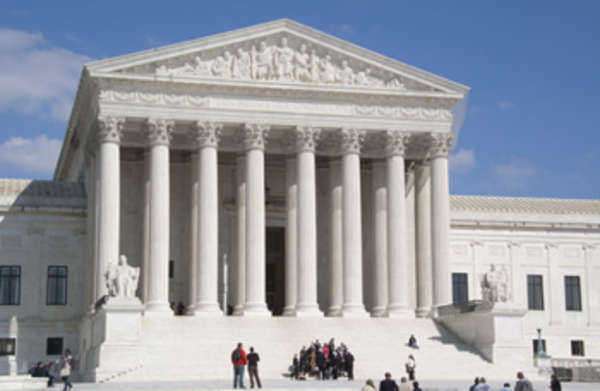
1. Brown v. Entertainment Merchants Association: In a 7-2 decision, the SC struck down a California law that would have banned the sale of violent video games to minors. The court held that the law violated the First and Fourteenth Amendments, which protect free speech and due process, respectively.
2. Wal-Mart Stores, Inc. v. Dukes: In a 5-4 decision, the SC blocked a massive gender discrimination lawsuit against the retail giant Wal-Mart. The court held that the plaintiffs did not have enough in common to form a class-action lawsuit.
3. Arizona Christian School Tuition Organization v. Winn: In a 5-4 decision, the SC upheld an Arizona tax credit program that provided scholarships for students to attend religious schools. The court held that the program did not violate the Establishment Clause of the First Amendment, which prohibits the government from establishing a religion.
4. Chamber of Commerce v. Whiting: In a 5-3 decision, the SC upheld an Arizona law that required employers to verify the employment eligibility of their workers. The court held that the law did not conflict with federal immigration law.
Conclusion
The nine justices on the SC in 2011 played significant roles in shaping federal law. Their differing viewpoints and legal interpretations led to contentious decisions that had far-reaching consequences for the nation. With the recent appointments of new justices, the current SC continues to wield immense power in interpreting federal law and shaping the future of the country.
What is Federal Law?
Federal Law is classified as the legal spectrum – in addition to any or all pertinent legislature – involving the Federal Government; the legal scope of Federal Law not only includes the regulation of governmental legislature, but also the proposition – and subsequent passing – of legislature.
Federal Law within the United States of America
Within the organizational structure of the United States, 3 branches of government exist in concert; the importance of 3 different governmental branches in lieu of a single governmental body was expressed within the Constitution of the United States. The Constitution is a legislative document that is considered to be the primary authority in Federal Law illustrating, conveying, and classifying precepts, laws, legality, and procedure with regard to both the citizens and the government of the United States of America. Within the Constitution, the authors expressed a desire to separate the governmental power structure to prevent the government from becoming too centralized and powerful; as a result, the oversight of Federal Law was distributed between the 3 branches of the United States Government – the Legislative Branch, the Executive Branch, and the Judicial Branch.
Federal Law vs. Administrative Law
While the responsibility and jurisdiction pertaining to both Administrative Law and Federal Law differ, their respective operation – as well as their symbiotic operation – results in the lawful establishment, regulation, and upkeep of United States Governmental Law; the jurisdiction of Federal Law and Administrative Law are disbursed as follows:
1. The Judicial Branch is comprised of the United States Supreme Court, which oversees judicial proceedings on a Federal level with regard to the maintenance of Federal Law; the Supreme Court upholds and enforces all laws passed by the legislative branch
2. Administrative Law involves the proposing and passing of legislation in accordance with pre-established guidelines that express the required legality of all Federal Law
Federal Law: Current Supreme Court Justices
As of January of 2011, 9 Supreme Court Justices are currently serving; this count is with the inclusion of a single Chief Justice amongst the 9 – upon their appointment, the 9 Supreme Court Justices have taken an oath to uphold, mandate, and regulate the law within the jurisdiction of Federal Law:
1. John G. Roberts (Chief Justice)
• Appointed by President George W. Bush
• Appointed on September 29th, 2005
2. Antonin Scalia
• Appointed by President Ronald Reagan
• Appointed on September 26th, 1986
📝 See Also
3. Anthony Kennedy
• Appointed by PresidentRonald Reagan
• Appointed on February 18th, 1988
4. Ruth Bader Ginsburg
• Appointed by President Bill Clinton
• Appointed on August 10th, 1993
5. Clarence Thomas
• Appointed by PresidentGeorge H. W. Bush
• Appointed on October 23rd, 1991
6. Stephen Breyer
• Appointed by President Bill Clinton
• Appointed on August 3rd, 1994
7. Samuel Alito
• Appointed by President George W. Bush
• Appointed on January 31st, 2006
8. Sonia Sotomayor
• Appointed by President Barack Obama
• Appointed on August 8th, 2009
9. Elena Kagan
• Appointed by PresidentBarack Obama
• Appointed on August 7th, 2010